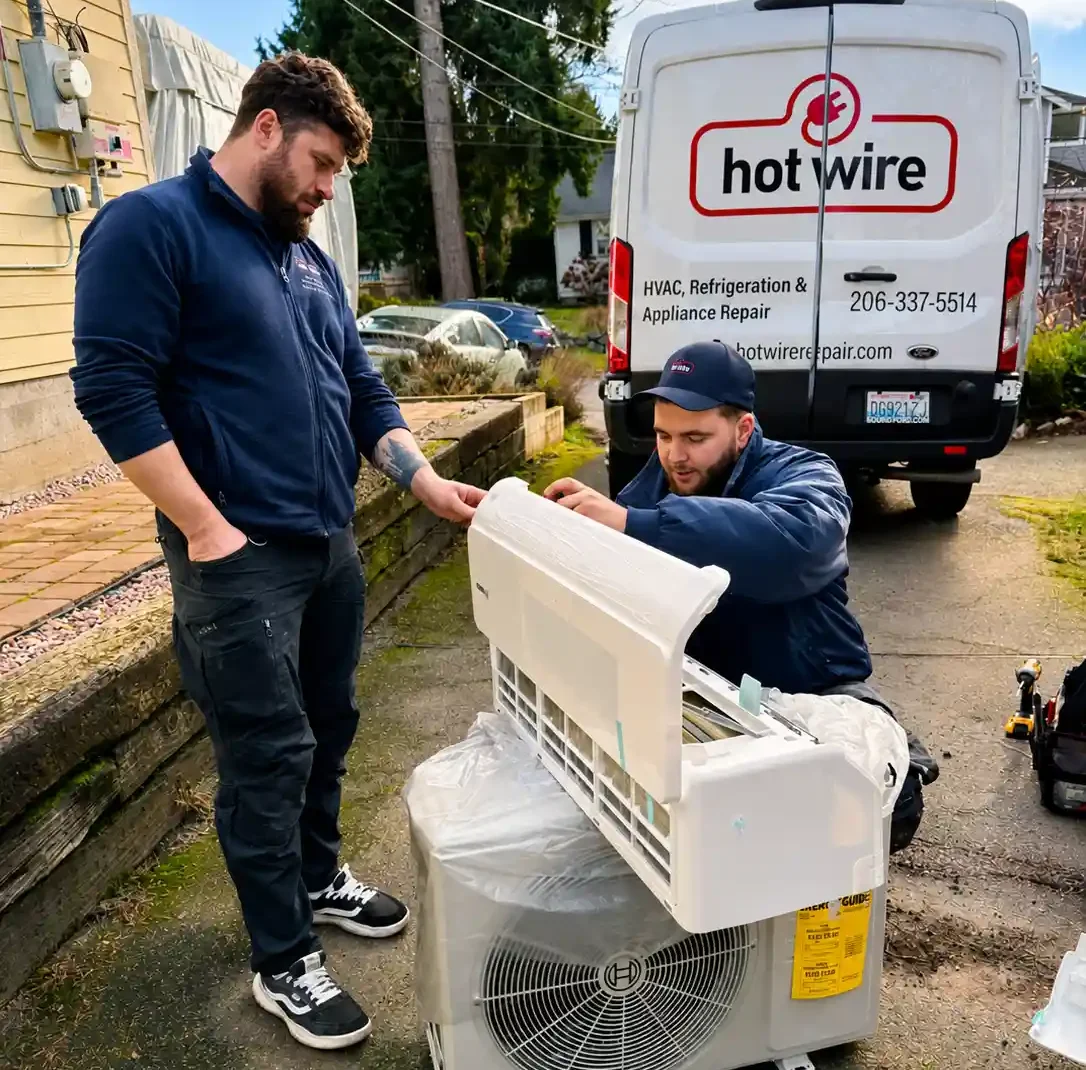
A properly functioning AC should cool without cycling off. If your system is struggling, it’s one of five culprits: refrigerant leak, condenser coil blockage, thermostat malfunction, compressor failure, or inadequate maintenance.
In Woodinville’s climate, premium systems like Bosch and Miele have sealed compressors and electronic controls—when they fail, they fail hard. The problem intensifies when homes are 3,000+ sq ft (most Woodinville estates). A 2-ton system just isn’t enough. These large homes demand 3.5 or 4-ton capacity. If your builder installed undersized equipment, no amount of maintenance will make it cool 90°F+ days.
Refrigerant leaks are the #1 call we receive. A tiny hole in the refrigerant line—often at connection points—causes slow leaks over months. You won’t notice until summer heat exposes it. By then, the refrigerant charge has dropped below operational threshold. Your compressor then runs dry, overheats, and fails catastrophically.
Condenser coil blockage is equally common. The outdoor unit’s coil accumulates pine needles, leaves, and dust from Woodinville’s dense forest environment. When the coil gets 80%+ blocked, your system can’t reject heat fast enough. The compressor overheats from working harder, thermal overload protection kicks in, and the system shuts down. It may restart after cooling for an hour, but it’ll shut down again under load.
Your air conditioning isn’t just about comfort; it’s about protecting your investment. When the AC dies mid-summer, water damage and mold aren’t far behind. That’s why professional diagnosis matters.
Step 1: Check your thermostat. Is it set to COOL mode? Is the temperature set lower than the room temp? (This catches 30% of ‘broken’ AC calls.) Many homeowners accidentally switch to HEAT or FAN mode during maintenance. Verify the setting is correct before assuming the system is broken.
Step 2: Inspect the outdoor condenser unit. Is it buried in pine needles? Leaves? Rodent droppings? Walk around your AC unit and clean a 3-foot radius around it. Pull out visible debris by hand—don’t use a pressure washer yet (high pressure damages the delicate fins). If you have a soft brush, gently brush the coil fins. If it’s freezing over (visible ice on the lines or coil), refrigerant is leaking. Stop here and call us—this requires EPA-certified repair.
Step 3: Feel the air temperature difference. Place a thermometer in the return vent (where air gets sucked into the indoor unit) and another in the supply vent (where cold air comes out). Run the AC for 10 minutes, then compare. A properly functioning system should have a 12–18°F difference. If the difference is less than 12°F, your system isn’t cooling effectively.
Step 4: Listen for the compressor. Does the outdoor unit hum when you set it to COOL? If silent, the compressor isn’t running—likely a blown capacitor or contactor failure. These are electrical components that trigger the compressor. They’re cheap (~$20) but require a tech to replace safely.
Step 5: Check the condensate drain. Is it clogged? (Common in humid Woodinville springs.) The small PVC line near your outdoor unit drains condensation from the indoor coil. If it’s clogged, water backs up, triggering a float switch that shuts down the AC. Look for water pooling near the indoor unit.
Step 6: Verify your air filter. Walk to your furnace/air handler closet. Is the air filter clogged with dust? A dirty filter restricts airflow, causing your AC to blow weak and not cool properly. Replace the filter (they’re $15-30) and try again. This fixes 20% of weak cooling complaints.
If your AC is under warranty, don’t DIY this. Bosch and Miele systems require factory-trained technicians. Opening the system voids warranty and risks EPA violations. If it’s out of warranty, you have three main options:
Option 1: Refrigerant Recharge ($300–600). If your diagnostics show weak cooling but the compressor runs, you likely have a slow leak. We pressurize the system, identify the leak source (usually at a connection fitting), and add refrigerant. But here’s the catch: if we just add refrigerant without fixing the leak, it’ll leak out again in weeks. We recommend identifying and sealing the leak at the same time, adding another $200–400 to the job. For Woodinville premium homes, this is the smart investment.
Option 2: Condenser Coil Cleaning ($200–400). If your outdoor unit is clogged, professional cleaning restores 80% of lost efficiency. We use a soft brush and coil cleaner—not pressure washers (those damage fins). After cleaning, we run a performance test to verify cooling restored. This is the cheapest fix and often solves the problem completely.
Option 3: Compressor Replacement ($1,500–3,500). If the compressor has failed, it needs replacement. This is expensive but necessary. A dead compressor means zero cooling—it’s not repairable. New compressor + labor + refrigerant recharge + testing = 3–5 day job. For Bosch and Miele systems, we stock common compressor models and can expedite the repair.
For Woodinville premium homes, we recommend annual maintenance in April and October—it cuts emergency calls by 80%. Spring maintenance (April) cleans condenser coils before summer load. Fall maintenance (October) verifies the system before winter heating demand. Each visit costs $150–250 but prevents catastrophic failures.
Our technicians carry Bosch and Miele certification. We’ll diagnose correctly the first time, not charge guessing fees. We offer same-day emergency service and financing options for compressor replacement.
No. EPA regulations require EPA Section 608 certification. Illegal refills void your warranty and risk equipment damage. The EPA fines homeowners up to $37,500 for DIY refrigerant work. Use a licensed tech.
10–15 years if maintained. Poor maintenance—clogged filters, dirty coils, no seasonal service—kills compressors in 5 years or less. Annual maintenance adds 5+ years to compressor life.
A small refrigerant leak becomes a compressor failure within weeks, multiplying repair costs 5x. A $400 leak repair becomes a $2,000 compressor replacement. Plus, while you wait, your home heats up, risking water damage and mold.
Miele warranties last 3–5 years, depending on your plan. We'll check your registration and serial number. If you're under warranty, most repairs are covered (you pay only labor, sometimes deductible). If you're out of warranty, you pay full repair cost.
Refrigerant overcharge, thermostat malfunction, or overheating compressor. Short-cycling wears out the compressor and wastes energy. Have it diagnosed—don't ignore it.
Keep the outdoor condenser clear of debris. Replace your air filter every 30–60 days. Schedule annual maintenance. Avoid setting the thermostat below 68°F on 90°F+ days (your compressor will overheat). Run the AC consistently; don't let it sit idle for months.